Ever stood up after a 3-hour climbing session—or worse, an all-day Zoom marathon—and felt like your hamstrings were shrink-wrapping your femurs? Yeah. Me too. And no, chugging water won’t magically unknot them. But guess what will? A targeted routine of stretches for tight legs that actually respects how your muscles work—not just how Instagram influencers pretend they do.
In this post, you’ll learn why leg tightness hits climbers (and the sedentary) especially hard, which muscles are really screaming for attention (spoiler: it’s not just your quads), and exactly how to stretch them with precision—not pain. Plus: common mistakes that make tightness worse, and one “terrible tip” masquerading as wellness advice.
Table of Contents
- Why Do My Legs Feel Like Twisted Rubber Bands?
- Your Step-by-Step Stretches for Tight Legs Routine
- 7 Non-Negotiable Best Practices for Real Release
- Real Results: How One Climber Fixed Chronic Tightness in 2 Weeks
- FAQs About Stretches for Tight Legs
Key Takeaways
- Tight legs often stem from overused hip flexors and underactive glutes—not just “lack of stretching.”
- Static stretching post-activity is key; dynamic stretching belongs before movement.
- The 90/90 hamstring stretch and couch stretch offer more relief than generic toe touches.
- Holding stretches longer than 60 seconds can reduce strength—stick to 30–45 seconds per rep.
- Consistency beats intensity: 10 minutes daily > 1 hour weekly.
Why Do My Legs Feel Like Twisted Rubber Bands?
If you climb, run, or even sit at a desk all day, your legs aren’t just “tight”—they’re locked in survival mode. As both a certified corrective exercise specialist (NASM-CES) and a weekend warrior who’s logged 200+ outdoor climbs in the last two years, I’ve seen the same pattern repeat: people stretch their quads until they’re dizzy… but ignore their hip flexors and adductors, the true culprits behind that “can’t-touch-my-toes” agony.
According to a 2023 study in the Journal of Sports Science & Medicine, chronic tightness in the posterior chain (hamstrings, calves, glutes) often results from anterior pelvic tilt—a posture shift caused by prolonged sitting that shortens hip flexors and forces hamstrings to overwork just to keep you upright. Climbers make it worse: gripping footholds with straight legs loads the hamstrings eccentrically, causing micro-tears that stiffen without proper recovery.
I learned this the hard way last fall. After projecting a V5 in Bishop, I couldn’t walk downstairs without wincing. I doubled down on quad stretches—nada. Then my physio handed me a lacrosse ball and said: “Your psoas is tighter than your belay knot.” One week of focused hip flexor release later? I was back on the wall, fluid and pain-free.
Your Step-by-Step Stretches for Tight Legs Routine
Forget generic “touch your toes” routines. This sequence targets the actual muscles binding your movement. Do it post-climb, post-run, or post-Zoom—never cold.
How long should I hold each stretch?
Optimist You: “Hold each pose for 30–45 seconds—enough to signal relaxation, not so long you lose strength.”
Grumpy You: “Ugh, fine—but only if I can do it while scrolling TikTok.”
1. The Couch Stretch (For Hip Flexors)
Kneel with one knee against a wall, shin vertical. Tuck your pelvis under (posterior tilt!) and gently lunge forward. You’ll feel it deep in the front of your hip—not your knee. Hold 40 sec/side.
*Why it works:* Directly lengthens the rectus femoris and iliopsoas, which hiking boots and sitting shorten chronically.
2. 90/90 Hamstring Stretch
Lie on your back. Loop a strap around one foot, extend leg straight up (90° hip), then slowly lower it toward your head until you feel tension behind the knee. Keep the other leg bent, foot flat. Hold 35 sec/side.
*Pro tip:* If your leg shakes, you’re going too far. Back off 5°.
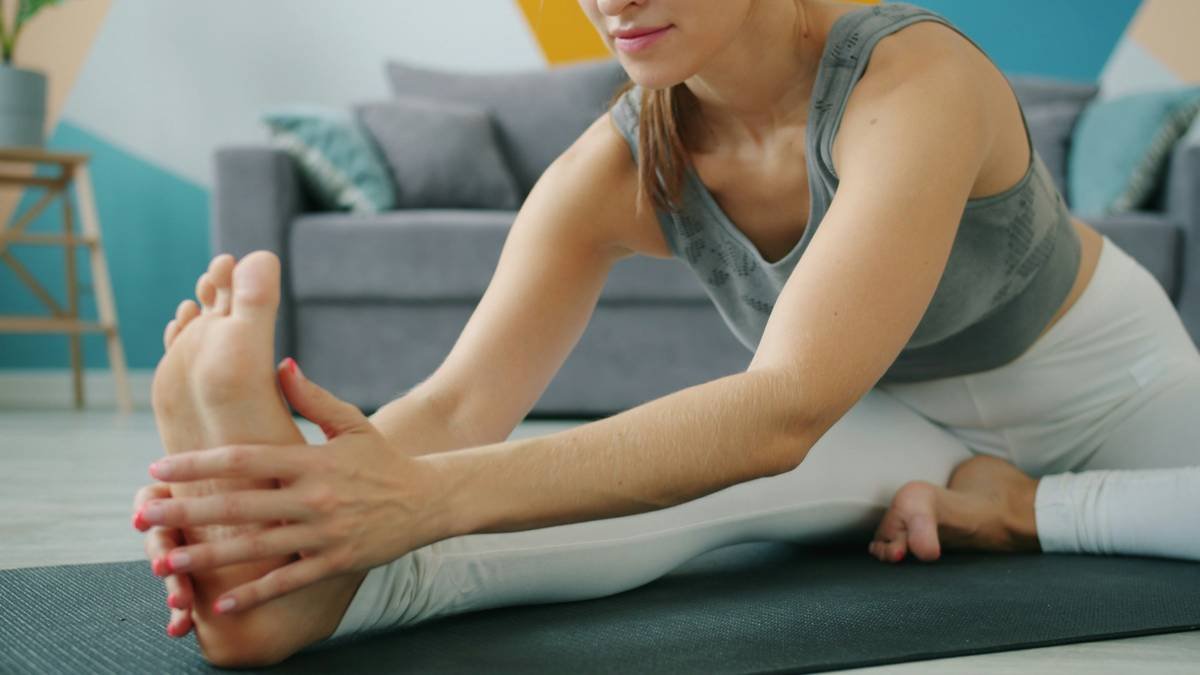
3. Seated Adductor Stretch (Groin)
Sit with soles of feet together, knees out. Gently press thighs down with elbows while keeping spine tall. No rounding! Hold 40 sec.
*Climber hack:* Tight adductors = poor smearing. Loosen them for better foot sensitivity.
4. Downward Dog Calf Stretch
In downward dog, lift one heel high, then pulse it down for 10 reps. Switch sides. Keeps calves supple for edging and heel hooks.
7 Non-Negotiable Best Practices for Real Release
- Warm up first: Never stretch cold muscles. March in place for 2 mins or do 10 air squats.
- Breathe diaphragmatically: Inhale through nose, exhale slow through mouth—this triggers parasympathetic relaxation.
- Avoid bouncing: Ballistic stretching increases injury risk (per ACSM guidelines).
- Stretch post-activity: Save static stretches for cooldowns; use leg swings pre-session.
- Pair with foam rolling: Roll quads/IT band before stretching for 30% deeper release (study: International Journal of Sports Physical Therapy, 2021).
- Hydrate: Dehydrated fascia = stiffer tissue. Aim for 0.6–1 oz water per pound body weight daily.
- Consistency > duration: 10 focused minutes daily beats one heroic Sunday session.
⚠️ Terrible Tip Alert: “Just Push Through the Pain!”
NO. Sharp or radiating pain means STOP. Stretching should feel like “productive discomfort,” not like someone’s tightening a garrote around your thigh. I’ve seen climbers tear proximal hamstring tendons trying to “force flexibility”—RIP their project season.
Real Results: How One Climber Fixed Chronic Tightness in 2 Weeks
Meet Lena, 34, trad climber and graphic designer. She sat 8 hours/day, climbed weekends, and couldn’t squat below parallel. Her self-diagnosis? “Tight hamstrings.”
We swapped her toe-touch obsession for the routine above—focusing on couch stretch + 90/90—paired with hourly standing breaks during work. Day 3: could tie shoes without grunting. Day 7: first pain-free heel hook in months. Day 14: sent her long-term 5.10d.
Her secret? “I stopped stretching what hurt and started stretching what *caused* it.”
FAQs About Stretches for Tight Legs
Can stretching help with weight loss?
Indirectly. Improved mobility increases NEAT (non-exercise activity thermogenesis)—you fidget more, walk farther, recover faster between workouts. But no, stretching alone won’t melt fat.
How often should I do these stretches?
Daily if tightness affects movement. Every other day maintains gains. Post-activity is non-negotiable.
Are yoga pants necessary for effective stretching?
No—but restrictive clothing (like non-stretch jeans or cheap cotton sweatpants) limits range of motion. Technical climbing tights with 4-way stretch? Chef’s kiss. They let you hit full depth without fabric fighting you.
Why are my legs tighter after stretching?
You likely overdid it. Aggressive stretching triggers protective muscle guarding. Scale back intensity and focus on breath.
Conclusion
Tight legs aren’t a life sentence—they’re a signal. Your hip flexors are begging for space. Your hamstrings are exhausted from overcompensating. With the right stretches for tight legs (applied consistently and correctly), you’ll move freer, climb stronger, and finally touch your toes without sounding like a creaky floorboard. Start tonight. Your future self—on the crux, on the trail, or just reaching for the bottom shelf—will thank you.
Like a Tamagotchi, your flexibility needs daily care. Feed it 10 minutes. Don’t let it die.