You bought “performance” climbing tights. They stretched. They hugged your legs. But halfway up the wall, they sagged, restricted your high step, and left you overheating. And you’re not alone. Most brands prioritize aesthetics over biomechanics—selling leggings that look like climbing gear but perform like yoga wear. The truth? Real flex climbing isn’t about how much the fabric stretches. It’s about how intelligently it moves with your body under tension.
The Hidden Flaw in “Flexible” Climbing Apparel
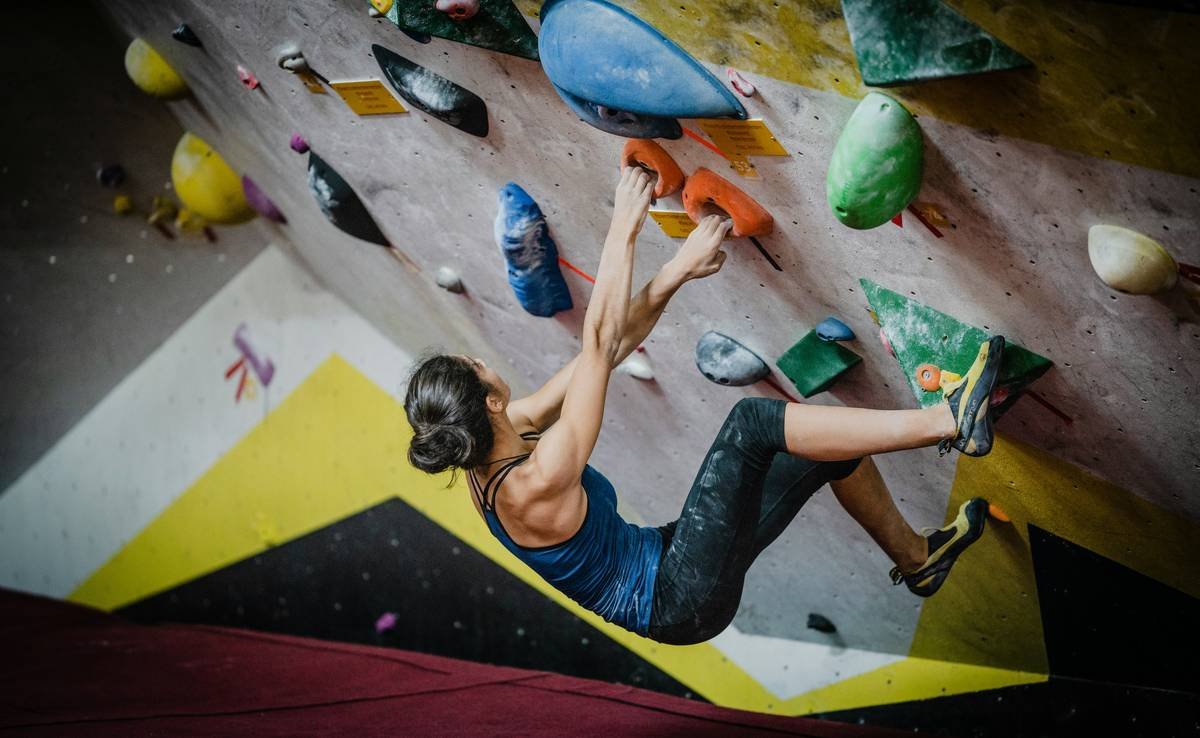
Most climbing tights fail at the moment you need them most—during dynamic lunges, kneebars, or smearing on micro-edges. Why? Because designers treat flexibility as a single-axis metric. Fabric stretches vertically? Check. Horizontally? Maybe. But human joints move in three dimensions simultaneously. A knee doesn’t just bend—it rotates, translates, and torques. Standard 4-way stretch fabrics often bind at the hip flexor or restrict glute activation precisely when you’re committing to a deadpoint. The result? Compromised power transfer, inefficient movement, and wasted energy.
And here’s what nobody tells you: excessive elasticity without structural reinforcement leads to fabric creep—the slow, irreversible deformation that turns your snug tights into baggy sweatpants after a dozen sessions.
Your Step-by-Step Guide to Optimizing Flex Climbing Performance
Forget chasing “more stretch.” Focus on intelligent mobility mapping—designing garments that accommodate your unique movement signature.
Map Your Movement Hotspots
Before buying another pair, identify where your body demands freedom. Do you crush slopers? You’ll need articulated shoulders—even in tights (yes, torsion matters down low). Are heel hooks your go-to? Look for gusseted crotches AND reinforced inner-thigh zones that prevent shearing.
Prioritize Strategic Reinforcement Over Uniform Stretch
The best flex climbing tights use zoned construction: high-stretch panels exactly where your range of motion peaks, paired with firmer, abrasion-resistant zones over contact points like knees and seat. This balance prevents blowout while preserving agility.
Test Under Load—Not in the Mirror
Try this: wear the tights, then simulate a campus board move or deep drop-knee on a crash pad. If the waistband rides or seams dig in during full extension, walk away. Fit isn’t static. It’s kinetic.
| Feature | Generic “Stretch” Tights | Optimized Flex Climbing Tights |
|---|---|---|
| Elasticity Type | Uniform 4-way stretch | Zoned bi-elastic + rigid anchor points |
| Gusset Design | Basic diamond crotch | Asymmetrical, hip-mobility mapped |
| Abrasion Resistance | None (thin knit) | Reinforced knee/seat panels (220g/m²+) |
| Moisture Management | Cotton-blend (retains sweat) | Hydrophobic warp-knit channels |
| Lifetime Value | 15–20 sessions before bagging out | 60+ sessions with shape retention |
The Industry Secret: It’s Not About Spandex—It’s About Shear Modulus
Here’s what material scientists in elite sportswear labs obsess over—but never mention in marketing: shear modulus. That’s the resistance of a fabric to slide internally when twisted or torqued. Most climbing tights have low shear modulus. Under lateral stress (like a sideways smear), fibers shift, creating micro-bunching that disrupts proprioception. Top-tier flex climbing gear uses engineered interlock weaves that maintain fiber alignment even at extreme angles. The result? Uninterrupted neural feedback from skin to brain—so your foot placement feels precise, not muffled. Few brands disclose this. Even fewer get it right.
Frequently Asked Questions
Do I need special tights for bouldering vs. sport climbing?
Bouldering demands more abrasion resistance at knees and hips due to frequent contact. Sport climbing prioritizes lightweight breathability for endurance. Both require zoned mobility—but the material weight differs.
Can regular yoga pants work for flex climbing?
Temporarily, yes—if you’re projecting easy routes. But yoga fabrics lack reinforced stress points. Under repeated dynos or heel hooks, they’ll thin rapidly and lose compression, reducing muscle support.
How tight should flex climbing tights actually be?
Snug enough that seams don’t shift during a frog position, but never restrictive at full hip extension. If you feel pressure behind the knee when straightening your leg, it’s too tight.