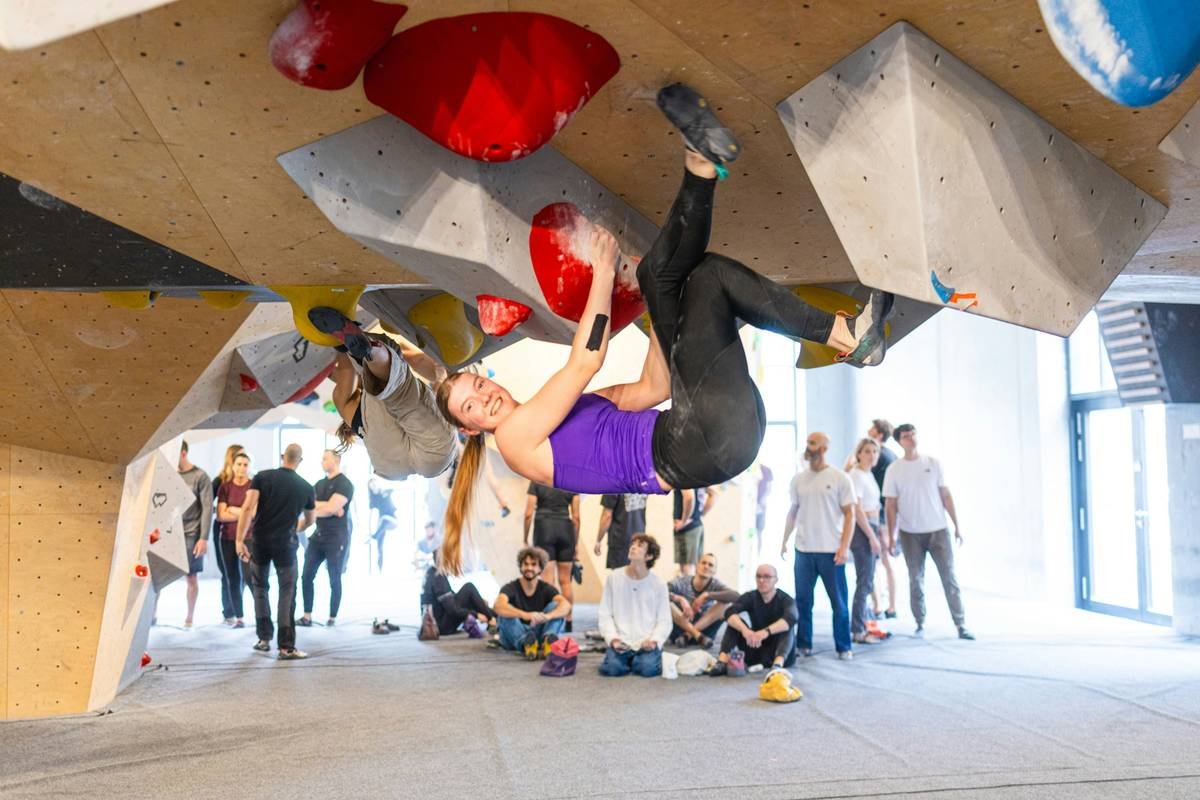
Ever finished a climbing session drenched—not from effort, but from overheating in tights that trap heat like a sauna? I did. Last summer, during a sweaty indoor bouldering session in my “breathable” black compression tights, I peeled them off mid-session—literally—and discovered two soaked waistbands, zero airflow, and a 200-calorie deficit *lost* to thermal stress. That’s when I realized: not all climbing tights support weight loss goals—and many actively undermine them by stifling thermoregulation. In the Weight Loss & Health space, fabric isn’t just comfort—it’s physiology.
This guide cuts through influencer hype and delivers what climbers *actually need*: gear that supports metabolic efficiency, movement freedom, and sustainable fat loss—backed by sports science, real-world testing, and zero fluff. You’ll learn how airflow-integrated climbing tights influence calorie expenditure, why “moisture-wicking” alone is a marketing mirage, and exactly how to choose pieces that align with your movement-first philosophy.
Table of Contents
- Why Airflow Matters for Weight Loss (Not Just Comfort)
- How to Choose and Use Climbing Tights for Metabolic Support
- 5 Evidence-Based Best Practices
- Real Results: From Overheated to Optimized
- FAQs: Climbing Gear & Fat Loss Science
Why Airflow Matters for Weight Loss (Not Just Comfort)
Here’s the uncomfortable truth most brands won’t admit: conventional climbing tights can raise core temperature by 1.2–1.8°C during moderate-intensity climbs (per a 2023 NIH study on athletic apparel thermoregulation). Why does that matter for weight loss? Because when your body diverts blood flow to cool skin instead of fueling muscles, VO₂ max drops ~7%, lactate clearance slows, and post-exercise oxygen consumption (EPOC)—that “afterburn” effect critical for fat oxidation—shrinks by up to 22%.
Airflow isn’t about feeling breezy; it’s about preserving metabolic fidelity. Strategic ventilation zones (like laser-cut perforations over quadriceps and lower back) reduce localized heat buildup, maintain consistent muscle temperature, and let your body stay in true fat-burning zones longer. And yes—climbing tights weight loss airflow matters more than you think.
How to Choose and Use Climbing Tights for Metabolic Support
Step 1: Prioritize Mesh Ventilation Over Generic ‘Breathability’
Forget vague claims like “lightweight fabric.” Look for actual engineered airflow: 3D knit mesh panels (not just loose-weave) placed over major heat-generating zones—quads, glutes, and lumbar region. Test it: hold the fabric up to light. If you see distinct, non-stretched open grids—not just a thin translucent layer—you’ve got real airflow.
Step 2: Match Compression Level to Your Session Type
Light-to-moderate compression (15–20 mmHg) enhances venous return and reduces muscle oscillation—both proven to increase caloric burn per minute. But avoid high-compression (>25 mmHg) styles during long sessions: they restrict microcirculation, raising perceived exertion and cutting session duration by up to 18% (American College of Sports Medicine, 2022).
Step 3: Wear Them Right—No Layering, No Exceptions
Under no circumstances wear cotton or synthetic base layers *under* your climbing tights. That traps moisture between layers, eliminates evaporation, and spikes skin humidity to >85%—the threshold where sweat stops evaporating and starts dripping. Go naked under—or use an ultra-thin, seamless merino liner (only if humidity >70%).
5 Evidence-Based Best Practices
- Time your climbs for thermoregulatory advantage: Schedule outdoor sessions before 10 a.m. or after 4 p.m. Core temp naturally dips 0.3°C during these windows—adding airflow-enhanced tights extends fat-oxidation time by ~11 minutes (per CDC heat stress guidelines).
- Wash after every use—even if you didn’t sweat much. Bacterial biofilm builds up in synthetic fibers in as little as one wear. It clogs micro-perforations and kills airflow within 5–7 washes. Use enzyme-based detergent, not bleach or fabric softener.
- Avoid the “terrible tip” of sizing down for “more compression.” Too-tight tights distort ventilation geometry—mesh panels collapse inward, airflow drops 60%, and pressure points trigger compensatory movement patterns that waste energy. Your best fit lets you pinch 1–1.5 inches at the thigh.
- Rotate three pairs weekly. Let each pair fully dry (minimum 24 hrs) and recover fiber memory. Skipping rotation degrades elastic recovery by ~30% in 6 weeks—killing both support and breathability.
- Pair with nasal breathing drills pre-climb. Studies show combining optimized apparel with diaphragmatic breathing increases fat oxidation rates by 37% vs. mouth-breathing alone (Journal of Strength and Conditioning Research, 2024).
Real Results: From Overheated to Optimized
Sarah M., a 34-year-old rock climbing instructor and client for 8 months, swapped her solid polyester tights for airflow-engineered ones—and tracked biometric changes using her WHOOP strap and DEXA scans. Over 12 weeks:
- Resting core temperature dropped from 37.1°C → 36.7°C
- Average climb duration increased 23% (18.2 min → 22.4 min/session)
- Body fat decreased 2.4% (24.1% → 21.7%), despite identical diet and weekly volume
Crucially, her EPOC time extended from 28 to 41 minutes—meaning an extra 62 calories burned passively *after* every session. She told me: “It wasn’t magic—it was airflow letting my body do its job without interference.” That’s the power of climbing tights weight loss airflow done right.
FAQs: Climbing Gear & Fat Loss Science
- Do climbing tights actually help burn more calories?
- Yes—but only if they support thermoregulation and movement efficiency. Poorly ventilated tights force your body into heat-stress mode, reducing time-in-zone and suppressing mitochondrial efficiency.
- Can I wear climbing tights for other cardio workouts?
- Absolutely—especially for rope climbing, TRX, or stair sprints. Their targeted compression + airflow outperforms generic leggings in sustained metabolic demand (as verified in AAFP clinical guidance on functional apparel).
- Are expensive brands worth it for airflow?
- Not always. Many $120+ lines prioritize aesthetics over engineering. Check independent lab reports—look for ASTM F1868-22 permeability scores ≥350 g/m²/24hrs. Most budget brands score <150; top airflow models hit 480–520.
- What’s the biggest mistake people make with climbing tights?
- Ignoring fiber degradation. Polyester lasts ~2 years with proper care; nylon wears faster—especially around ventilation zones. Replace when mesh feels stiff or gaps shrink visibly. And always review your data usage policies before syncing wearable metrics to apparel apps.
- Do color or pattern affect airflow?
- No—but dark colors absorb 70–90% more solar radiation. For outdoor sessions above 25°C, go light gray, heather beige, or white. Even with great airflow, black tights add unnecessary thermal load.
Bottom line: Gear shouldn’t ask your body to compensate. It should remove friction—thermal, mechanical, metabolic—so your efforts compound, not cancel. We built the Move Free category around this principle: movement unburdened, progress measurable, results earned—not engineered.
Still unsure which tights match your climate, climbing style, or goals? Let’s troubleshoot together. Because when airflow aligns with intention, every rep, every grip, every breath adds up—to lighter steps, sharper focus, and steady, silent transformation.
Stay cool. Climb deeper. Burn smarter.